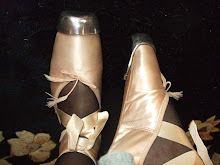
When you told me that the cramping was the spasming type .I thought of the Nutritionist advice, and here it is.
Sudden spamming in the leg can be caused by:
1) Dehydration
2) Lack of Potassium
3) Lack of Magnesium
Information on Potassium
Overview:
Potassium is a very important mineral for the proper function of all cells,
tissues, and organs in the human body. It is also an electrolyte, a substance
that conducts electricity in the body, along with sodium, chloride, calcium, and
magnesium. Potassium is crucial to heart function and plays a key role in
skeletal and smooth muscle contraction, making it important for normal digestive
and muscular function, too. Many foods contain potassium, including all meats,
some types of fish (such as salmon, cod, and flounder), and many fruits,
vegetables, and legumes. Dairy products are also good sources of potassium.
Information on Magnesium
Every organ in the body -- especially the heart, muscles, and kidneys -- needs
the mineral magnesium. It also contributes to the makeup of teeth and bones.
Most important, it activates enzymes, contributes to energy production, and
helps regulate calcium levels as well as copper, zinc, potassium, vitamin D, and
other important nutrients in the body.
You can get magnesium from many foods. However, most people in the United States
probably do not get as much magnesium as they should from their diet. Foods rich
in magnesium include whole grains, nuts, and green vegetables. Green leafy
vegetables are particularly good sources of magnesium.
Food that contain Potassium
Food sources
the richest sources of potassium are fruits and vegetables. A dietary survey in
the U.S. indicated that the average dietary potassium intake is about 2,300
mg/day for adult women and 3,100 mg/day for adult men (30). The potassium
content of some relatively potassium-rich foods is listed in milligrams (mg) in
the table below (36). For more information on the nutrient content of foods,
search the USDA food composition database.
Food Serving Potassium (mg)
Banana 1 medium 422
Potato, baked with skin 1 medium 926
Prune juice 6 fluid ounces 528
Plums, dried (prunes) 1/2 cup 637
Orange juice 6 fluid ounces 372
Orange 1 medium 237
Tomato juice 6 fluid ounces 417
Tomato 1 medium 292
Raisins 1/2 cup 598
Raisin bran cereal 1 cup 362
Artichoke, cooked 1 medium 343
Lima beans, cooked 1/2 cup 485
Acorn squash, cooked 1/2 cup (cubes) 448
Spinach, cooked 1/2 cup 420
Sunflower seeds 1 ounce 241
Almonds 1 ounce 200
Molasses 1 tablespoon 293
List of food that has magnesium
List Of Food Sources Of Magnesium
Artichoke
Barley
Beet greens
Black beans
Brazil nuts
Broad beans
Broccoli
Brown rice
Buckwheat flour
Bulgur
Cowpeas
Halibut
Kidney beans
Lima beans
Milk
Navy beans
Oat bran
Okra
Oysters
Peanuts
Plantain
Pumpkin seeds
Rockfish
Scallop
Soy milk
Soybeans
Spinach
Squash seeds
Sweet potato
Tofu
White beans
Whole grain cereal
Whole wheat bread
Whole-grain cornmeal
Yogurt
Ok..So, here's the deal try 30 minutes before you toetap eat about a 1oz of peanuts
and about half a banana with some water . If you don't wish to do it this way
try a mid morning snack of peanuts and 30 minutes before tapping eat a small
banana with some water. It is still quite filling and, still will get the
minerals in your body that you need!
If you have this problem this should solve it.
Hope this helps
Showing posts with label tap. Show all posts
Showing posts with label tap. Show all posts
Wednesday, January 19, 2011

Monday, July 6, 2009
Toe Druming

Hello I would like to briefly talk about another form of toetap .Called Toe Drumming ;This Verizon of a long time ago dance form .That was done in Music Halls and Vaudeville. Was done with out taps. All you needed was a drum and,a pair of pointe shoes.With a leather drum head and ,metal shell. The snare drum type should not be more than 6 inch's high by 14 inch's wide. This height was good encase the drum broke .you could recover without real damage to yourself. Also,the drum should be able to hold your weight .While tapping on it . The idea was to tap out a rhythm to music .While on pointe . This form of toe tap or toe drumming as it was called predated toetap and was the most likely the driving force into Toetap itself. As performers searched for newer thing to entertain the masses. The performers name in the picture is Lily Elsie. She was a Music Hall performer in the late 1890's early 1900's. This is the only picture of this dance form to survive.
Sansha's TA-11"s
 Here are two pictures
the top is the Sansha TA-11 a hybrid shoe .Which is a Sansha fusion pointe shoe with a tap shoe sole and taps on it . The bottom is a regular pointe shoe with toetaps or in modern language pointe/taps .I preferr toetap because the tap are on the box's toe.

Hello I would like to pointe out Some differences.
Between Sansha TA-11's And a Toetap shoe.
Or, the modern name Pointe /Tap shoe.
My friend Ben wrote to the boss of Sansha .Trying to get them to make a traditional Toetap shoe . With many tries .They still kinda missed the mark. This shoe(the TA-11) is what I would call a hybrid shoe .Consisting of a Pointe shoe and a Tap shoe sole .While you can tap on pointe with it .The shoe which has no tap on its boxfront.Which will give you a muffled sound . You can do all the tap moves and pinte work .Just you can not combine them .Into a real toetap production.
Toetapper Like to break the classic form of ballet . Most dancers do pointe /tap or toetap with out realizing it . When they get a new shoe they tap the point to soften it or , so I am told .Toetaper love to hear there shoes make nose, as to say freedom .From being so rigid and repetitiveness.
Since I am the last person to make these taps . I do know about them . I make each tap to the wearer so they can do pointe work without impedance from the tap.I become a expert in this field. A toetap shoe has the tap on it's boxfront . You can do all most any tap move or dance step. Just on pointe .I have made the taps so,you can combine pointe work into each performace.The Pointe /Tap or toetap shoe, I make are a true fusion of these two arts .
Pointe shoe quiz. Can anyone tell me what shoe my taps are on ?
Thursday, June 4, 2009
Some toetap steps

When I was talking to the mother of a dancer.
The New tap dancer did not understand all the language of tap .
So , if anyone did not understand Kathleens answer...
it breaksdown like this:She said Hop ,Shuffle, Step ,Toe Grind ,Brush Step.
Lets take them by themselves
Hop: A jump into the air on one foot: With the weight on one foot and the free foot in the air in any direction, flex the knee of the supporting foot; spring into the air and land on the same foot. Shuffle: Are broken down into 6 types Front, back , Side,Double ,leap and Step ;A forward brush followed by a back brush to the front, side or back,executed rapidly in a 16th note rhythm and counted "a 1"
.Front Shuffle:The basic "Shuffle" - with the feet in line with the hips and the toes directly forward, flex the R knee up in front of body -- lower the leg, striking the toe of the foot against the floor in a forward motion. At this point, the L or supporting leg is straight, where in the R ft is straight and extended forward of the body. As you flexthe R knee, strike the toe of the R ft on the floor in a backward motion. The shuffle should be executed slightly forward of supporting foot. The free foot should always remain in front of the supporting leg by flexing the knee forward and up on the back brush.
Side Shuffle:Extend the right foot to the R side, toes are in line and there is no turnout of the R foot.
Back Shuffle:With the weight on the left foot and knee slightly bent, extend the Rft bk with the toe turned out. From this position, execute theshuffle on the side of the big toe.
Double Shuffle:Two Back Shuffles ("8 and a 1").Shuffle, Leap A forward shuffle on the free foot leaping forward to the same foot.Shuffle, Step A shuffle with the free foot, followed by a step on same foot. Once referred to as a "Three".
Toe: This has 9 types they are: Back ,Beat,Click, Dig,Drop,Heel,Stand, Toetap,and ToetipToe Back Same as a Toe Tap: Strike the point of the toe in back of the standing foot and immediately raise the foot from the floor. Does not take weight.Toe Beat Same as a Toe Tap but the toe remains on the floor.
Click Same as Click Toes: With the weight on the heels of bothfeet (toes up) Strike the toes together.
Toe Dig Emphasized step fwd on the toe of the foot with the kneebent; a strut or jazz type movement.
Toe Drop force the toe to the floor Toe-Heel An old term for a Brush R fwd, Dig R toe In reg. tap it's a Brush R fwd, Dig R heel fwd (toe up).
Toe Stand A movement of the old school of tap wherein the dancer is on the points of both feet.
Toe Tap A striking of the point of the toe in any direction andimmediately raising the foot from the floor.
Toe Tip Same as a Toe Tap.
Grind: A circular movement of the hipsBrush: There are 3 types Brush ,Brush Steps and Brush FlatBrush A one-sound kicking movement, in any direction. With the knee in a flexed position, strike the toe of the free foot against the floor, the leg raises in the air until the knee is straight. This applies when the brush is executed in a forward movement. A brush maybe executed in any direction but basically it is forward or backward.
Brush Step A forward Brush Step is the same as a Flap. Whether it isa forward or back brush step, the movement can be executed in any desired rhythm pattern.
Brush Flat A flat brush is executed in exactly the same fashion as a basic brush - the difference is that the entire Toe of the foot strikes the floor in the pendulum movement.
Flap:A forward brush step: With the knee in a flexed position, strike the toe of the free foot against the floor in a forward motion,stepping forward on the same foot; the step takes weight. May be executed in any direction but normally forward.
Step:There are 4 types ,they are Step, Step Chug,Step Brush/Toe Drop,Step PullStep; A placing of the front part of the foot firmly on the floor,taking weight; always executed on the Toe of the foot unless otherwise noted.
Step Chug A stepping forward on the toe or flat of the foot, followed by a Chug which is an exaggerated heel drop. In toetaps case a exaggerated toe drop Step Brush, toe Drop A basic combining of tap movements:A. Measure Count Movement1 1 Step L bk and Brush R bk2 Drop L toe3 Step R bk and Brush L bk4 Drop R toeStep Pull Also known as a Step, Slide: A step and slide back on same foot. The term "Pull" has been used to mean a Back Brush.
Chug:Sometimes referred to as a Buck: A forward movement accentingthe toe drop: With the weight on one foot, the free foot is raised;force the toe of the foot to the floor with exaggeration, thus moving the foot forward approximately 3 inches.All tap definitions where modified for Toetap
Hope this helps
Paul D. Let me know how I did?
Sunday, May 31, 2009
Toetap History

Before we begin, I want to say toetapping is for both men and women, just as pointe was and is for both men and women. To know toetap we are going to explore some of the events leading up to this fusion style of dance.Toetap is a fusion of Toe Dancing and Tap Dance where the dancer male or female dances on pointe (using ballet pointe shoes with a metal tap on it's platform) tapping out a series of steps to music. I remember as Rosie Raditor said to me "Toe tap has very little to do with ballet and everything to do with tap!" A toetapper uses the same riffs, shuffles, and hops as a normal tap dancer, just does it on pointe. You can even do a coffee grinder. Buck and wing what ever you wish. Even before women dominated the stage, men were the first to go on pointe. In 1779 Gennaro Magri writes about a performance of a dancer who rises to a full pointe and , it is indeed a man. In his Theatrical Treatise of "The Art of Dancing", Margi relates how Antoine Pitrot raised " his whole body on the tip of his toe (extending) all the joints so, perfectly that the whole length and foot itself (fell) into one perpendicular line". It would be several decades before there would be a discussion of a women doing the same feat. (source article Setting the Stage) Ever since Marie Taglioni (1804-1884) raised herself on tip of her toe's ballet had a new style of dance sur les pointes.In 1735 Ballet arrived in America. An Englishman Henry Holt staged the first production for the amusement of the Charleston, South Carolina elite. The production was not well received. Also,in that year according to the Performing Arts timeline.John Hippisley’s Ballet/ Opera (Flora) Is performed in America. It is the first Ballet/ Opera to be presented to the elite of Charleston In truth if it was not for the elite Americans, ballet would not have survived in America. In 1751 the first professional theater company in the colonies.The Virginia Company of Comedians opens a temporary wooden playhouse in Williamsburg. It is important to note. In my opion, that without this group of performers, sewing the seeds of vaudville in America many of the things we hold dear would not have come to pass. It is also important to note that the play opened on October 9th of that year . It was attened by The emperor of the Cherokee Nation, his Empress and their son, the Prince. Also, several of princes warriors.Great men and their Ladies where present at the play.On February 6,1768, a group of players known as the Virginia Company of Comedians appeared in Norfork. Other Theathers were erected in Virginia during theses years.Among them the Theatre of Varieties in Richmond, introducing vaudville. http://xroads.virginia.edu/~HYPER/VAGuide/theater.html Like all dances toetap needs a base to work from. While ballet was on a respirator, a storm was brewing. This storm started small with a man called "Master Juba", a young African-American performer named William Henry Lanes donned rags, covered his face with burnt cork, and danced a foot stomping, hand clapping ditty called "Juba". One awestruck critic marveling at Lanes's ability to maneuver his legs and feet in a series of steps with such speed and energy decided this performance reflected the dance style of an entire people, which was later labeled "Negro Dance" (Source Tap History "Juba"). This type of Minstrel Show was common place through much of the civil war. Juba successfully brought out another African-American dancer named Johnny Diamond who performed at the Vauxhall Garden in about 1840 when he was 17. In 1845, the Great Potato Famine struck Ireland . In my opinion, this event was a catalyst for toetap. It brought a people, the Irish with their love for rhythmic dances such as step, clogging, and the jig, to America. Even today clogging and tap dance share some of the same steps. The music halls of the day started to cater to the new influx of people. As this societal upheaval was taking place in America, a great force for tap and toetap, Bill Robinson ,was performing. This one person, in my opinion, was in part the father of toetap. I base this statement on a TV show called "To Tell The Truth" (1956-1967) where a woman who fooled the panel of judges said that she did Mr. Robinson's routine (right after him) as he did it step for step only on pointe. Then, to prove it, she performed the routine for the panel. Let's give a little "yeah" for one of America's tap masters. Bill "Bojangles" Robinson (1878-1949), famous for his soft shoe and tap routines and especially famous for his "Stair Dance", a variation of which was a toetapper's staple between 1920 and 1930. I read an article saying that he used wooden taps, and danced mostly on the front part of the foot doing shuffles and riffs. Ballet comes off the respirator. With a dancer By the name of Adeline Genée (1875-1955),Even before the great Ziegfield opened his follies in 1909.He produced a show called “The Soul Kiss”. Which opened on Jan.28,1909 at the New York Theater in New York City. Staring Prima Ballerina Anita Jensen (Adeline Genée).The Show was a huge success!Zeigfeld billed her as the world’s greast dancer. In two country’s she made people aware that ballet is a true art form. She is also,credited with the popularizing and, the reestablishment of ballet in Great Britian and in America. In 1931 the Genée Metal Awards were instituted in her honor. They remain the most important awards of excellence given to a young dancer. In 1950 was created Dame of the Order of the British Empire for her services to ballet. In my opion this is worth noting for keeping a dancer form alive, because without her,it surely would have died. You can read a little about her here Http://parlorsongs.com/issues/2003-9/thismonth/featureb.php. You also, can see Ziegfeld comments and,a picture of Adeline Genée. Here http://www.collectorspost.com/GoldenAge.htm . In Finishing all Ballet dancers worth their toeshoes should really thank this great dancer. For Ballet in America was dying, when Tap was becoming king. If toetap had a father it needed a mother. In my opion this woman was Bessie Clayton who laid the foundation for toetap. Bessie Clayton's family were Irish immigrants who settled in Philadelphia. She was trained by George W. Smith and made her debut in 1891 in "A Trip to Chinatown" as a specialty dancer. Miss Clayton became famous for her pique turns and pendulum kicks while going down a STAIRCASE, which she did in "The Passing Show of 1913". She also danced in unblockd pointe shoes. Now, we need a medium to fuse all theses elements together. That medium was Vaudeville. Vaudeville dance terms make it hard to determine who is toe dancing [dancing en pointe] and who is toetapping. Vaudeville's definition goes like this: anything outside the norm is called a "eccentric dance". In today's mind set, that is like when hip-hop first caught on in the 1970's. It was outside the normal dance style of the day, which was Disco. The catagories of "eccentric dance" are Eccentric Toe Dance, Specialty Dance, Eccentric Ballet dance, Toetap Dance, and Toe Drum Dance. You see what I mean? The first toetap ad I found was in a Dance Magazine from May 1929, which advertised Haney's Toe Dance Tappers. The ad also stated that Ethel Norris Berkshire wore them in a play called "Rain or Shine" which she performed in 1928. By 1929 there were 1000 toetap shoes on the market. America was so tap crazy they just could not get enough. Capezio jumped on the bandwagon too by making their own toetap shoe with a wood sole and taps. Freed of London made taps till 2007, stopping mainly due to libility law suits. I am the only one left that still makes toetaps for pointe shoes. Selva made toetap shoes with steel shanks. The problem with this idea was when the shanks broke, they could enter the person foot cutting into the peroneus longus tendon, ending many a dance career. These shoes made it possible to go on to pointe with very little experience or training which was an accident waiting to happen. I'm going to get off toetap history and talk about toetap's bad reputation. Toetap has gotten a bad reputation over the years, mainly due to people who where not ready to attempt even a toe-loop with regular shoes. Dancing on pointe , You need strong ankles, even for a basic toe-loop and stronger ones for a pointe shoes. The mind set at the time was to put small children up on pointe before they were ready because their moms wanted their little girl to be a star. This was madness! They made books for home courses promising if you did what was in the book you too could be on pointe in two weeks. A modern pointe shoe is a deceptively simple looking thing, yet it can harm you in unbelievable ways including black [bruised] toenails, bleeding feet, torn achilles tendons, popped hip, busted knees, stress fractures, to name a few. Yet, no parent will sue a pointe shoe maker from these injuries. [This is, if you go on pointe without the proper training and strength, or with ill fitting shoes. These things should NOT be happening and will need more than just bandaids and injury treatment to fix.] Now add a piece of metal to the toe and get the same injury... lawsuit. I saw a video clip where a ballerina slipped and fell flat on her face. Then and only then did the teacher from the side lines say "Be careful, the stage was just waxed". You can bet there were no law suits there; it was most likely put down to experince. Amazing! [You're going to fall. It's a fact of life for a dancer. Many, many studios have you sign a contract stating that you will not sue if you get injured while dancing there. Frankly, injuries are almost never "the shoe's fault". They are either a result of overuse, ill fitting shoes, bad training, an accident or any combinations of these.] I still feel that a toetap dancers need to be strong in pointe [and therefore ballet technique] and tap, and then still be guided by a teacher. Yes, there are still toetap teachers to learn from. Then, understand there are going to be mistakes. Learn from them and improve, just like the system for pointe and tap [and any other dance form].Here are just a few toetap dancers whom I have found:Addam Sisters: A three sister act that did singing, Specality Ballet (toetap), and Theatrical Dance. Errol Addison: English ballet and theatrical dancer. Addison and many American Cecchetti students were the innovators of eccentric ballet and tap techniques.La Petite Adelaide: Performed in many plays including "Up and Down Broadway". She danced on tables, inside hampers, and on drums.Edith Barstow: American theatrical ballet dancer and theatrical choreographer. Besides doing all that. she often paired up with her brother Richard for a toetapping and exhibition ballroom act.Richard Barstow: American theatrical dancer and Specialty Vaudeville adancer. Although born with a club foot, he became an Eccentric Toe Dancer, specializing in toetapping, long distance Toe Dancing, Russian pointe work and the down the staircase trick that was popularized by Bessie Clayton and Mazie King. In a old video clip, he jumps off a Baby Grand Piano, then lands standing on pointe.Lina Basquette: American theatrical ballet dancer and child-star. In 1922, she made her New York debut as a Ballet Specialty Dancer in the Ziegfeld Follies show.Ethel Norris Berkshire: American theatrical and ballet dancer and speciality Vaudville dancer; did a toetap act in the 1928 play "Rain or Shine".Bessie Clayton: American theatrical and ballet dancer. Was famous for doing pique turns on pointe while going down a staircase.Dorothy Datton: 1930's movie star ballet and theatrical dancer. Starred in "The Idol of the North". Did a toetap number and was introduced by Glen Ford! Lily Elsie: Music hall artist and Specality Ballet Dancer. She did a ballet tap routin and one with a drum (Toe Drumming).Harriet Hoctor: American theatrical ballet dancer. Miss Hoctor introduced the backbend on pointe sequence she became famous for while performing in The Bird Dance in "Topsy and Eva". You can see this sequence in the movie "Shall we Dance". She taught her students toetap until her death in 1977.Mazie King: American Eccentric Toe dancer. She danced the "staircase trick" and labeled herself as the greatest novelty dancer in the world.Iris Kirkwhite: English theatrical ballet dancer. Kirkwhite performed her specialty, a pizzicato waltz in a form of toetapping, in the London production of "The Blue Mazurka", ''Sunny", and "The Andre Charlot 1928 Revue" with Errol Addison. She also danced in the "Moonlight Ballet".Joyce Murry: American ballet and theatrical dancer. Did a toetap number in the movie "Broadway Melody of 1929" listed under cast member as a Specialty Dancer.Margret Turner: Movie and theater star. Toetapped on a wooden dru, on video.Rosie Radiator: American ballet, tap, and toetap dancer who still teaches toetap to her students today at http://www.radtap.com/Gypsy Rose Lee: Flim ,TV, Vaudville and Burlesque star. Singer, ballet dancer, actress, and Specialty Dancer. In a play by the same name [Gypsy], a toetap routine is performed when Gypsy is a little girl. This has been switched to a regular tap dance routine in the modern version of the play.The editing of the article goes to Two very nice lady's: Selly of http://www.danceoutlook.com/And Jill L. my dearest friend
Subscribe to:
Posts (Atom)