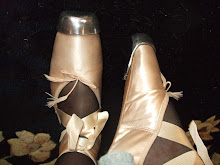
When you told me that the cramping was the spasming type .I thought of the Nutritionist advice, and here it is.
Sudden spamming in the leg can be caused by:
1) Dehydration
2) Lack of Potassium
3) Lack of Magnesium
Information on Potassium
Overview:
Potassium is a very important mineral for the proper function of all cells,
tissues, and organs in the human body. It is also an electrolyte, a substance
that conducts electricity in the body, along with sodium, chloride, calcium, and
magnesium. Potassium is crucial to heart function and plays a key role in
skeletal and smooth muscle contraction, making it important for normal digestive
and muscular function, too. Many foods contain potassium, including all meats,
some types of fish (such as salmon, cod, and flounder), and many fruits,
vegetables, and legumes. Dairy products are also good sources of potassium.
Information on Magnesium
Every organ in the body -- especially the heart, muscles, and kidneys -- needs
the mineral magnesium. It also contributes to the makeup of teeth and bones.
Most important, it activates enzymes, contributes to energy production, and
helps regulate calcium levels as well as copper, zinc, potassium, vitamin D, and
other important nutrients in the body.
You can get magnesium from many foods. However, most people in the United States
probably do not get as much magnesium as they should from their diet. Foods rich
in magnesium include whole grains, nuts, and green vegetables. Green leafy
vegetables are particularly good sources of magnesium.
Food that contain Potassium
Food sources
the richest sources of potassium are fruits and vegetables. A dietary survey in
the U.S. indicated that the average dietary potassium intake is about 2,300
mg/day for adult women and 3,100 mg/day for adult men (30). The potassium
content of some relatively potassium-rich foods is listed in milligrams (mg) in
the table below (36). For more information on the nutrient content of foods,
search the USDA food composition database.
Food Serving Potassium (mg)
Banana 1 medium 422
Potato, baked with skin 1 medium 926
Prune juice 6 fluid ounces 528
Plums, dried (prunes) 1/2 cup 637
Orange juice 6 fluid ounces 372
Orange 1 medium 237
Tomato juice 6 fluid ounces 417
Tomato 1 medium 292
Raisins 1/2 cup 598
Raisin bran cereal 1 cup 362
Artichoke, cooked 1 medium 343
Lima beans, cooked 1/2 cup 485
Acorn squash, cooked 1/2 cup (cubes) 448
Spinach, cooked 1/2 cup 420
Sunflower seeds 1 ounce 241
Almonds 1 ounce 200
Molasses 1 tablespoon 293
List of food that has magnesium
List Of Food Sources Of Magnesium
Artichoke
Barley
Beet greens
Black beans
Brazil nuts
Broad beans
Broccoli
Brown rice
Buckwheat flour
Bulgur
Cowpeas
Halibut
Kidney beans
Lima beans
Milk
Navy beans
Oat bran
Okra
Oysters
Peanuts
Plantain
Pumpkin seeds
Rockfish
Scallop
Soy milk
Soybeans
Spinach
Squash seeds
Sweet potato
Tofu
White beans
Whole grain cereal
Whole wheat bread
Whole-grain cornmeal
Yogurt
Ok..So, here's the deal try 30 minutes before you toetap eat about a 1oz of peanuts
and about half a banana with some water . If you don't wish to do it this way
try a mid morning snack of peanuts and 30 minutes before tapping eat a small
banana with some water. It is still quite filling and, still will get the
minerals in your body that you need!
If you have this problem this should solve it.
Hope this helps
Wednesday, January 19, 2011

Tuesday, January 18, 2011
Toetap and the calf muscle
A good friend of mine has a repeating calf muscle problem .She most likely has not see someone to fully deal with the problem. So, I am going to give her a few ideas to try and help her.
Since toetap or pointe/tap have the similar calf issues as clogging,pointe. Also share some of the same injury's as high heels or pointe boots. I am going to share a few calf issues.
This one from Answerbag goes like this :
Calf muscle injury's acour in either the gastrocnemius or the soleus muscle.The gastrocnemius is the large ,more obvious calf directly below the knee. The soleus lies directly below it and,is attached to the Achillies tendon. The most calf injury's are caused by overuse durning activity's such as basketball,footballweightlifting,or dancing.
Significance:
Calf muscle injurys can be serious or disabling as they affect a persons ablitity to walk.
Idenification:
Calf muscle injury are categorized in grades 1,2 or 3 accourding to the Sports injury Clinic.
Grade 1
Are mild strains that cause mild pain and tightness
Grade 2
can cause swelling and brusing as well as pain while walking.
Grade 3
Is the most sever ..such as a torn muscle or ruptured tendon.
Effect
A grade 3 rupture can cause a deformity in the calf as the muscle tendon becomes detached from the Achillies heel and ,bunches up at the top of the leg just below the knee. Someone with this type of injury may not be able to contract his muscle.
Surgical repair is often necessary.
Type of Non Surgical Treatment:
Most calf sprains are pulled muscles that can be treated witha combination of rest,ice,heat and anti-inflammatory medicans such as ibuprofen,aspirin ,naproxen,Etodolac, Tramadol,Cyclobezaprine....they even have a few that will get you down the montain the day before yesterday!Yes ! they can be that strong!
You can also, weara heel pad to lesson the preasure on the two major calf muscles.
Considerations:
Once the intial inflammation is under control .Use heat to increase blood flow to the injuried calf muscle. Heat helps relax the muscle and,get them ready for renewed physical activity. Stretching and strenth building exercises can also help.
Here was another Answer :
The plantaris Muscle is a thin muscle that starts at the knee joint. Which attaches to the Plantaris tendon beginning at the calf.
The Plantaris tendon then elongates down the calf to the foot.Connected to the joints in the foot.
Both the Plantaris muscle and,tendon are prone to injury.Because they are connected to two joints .
This answer came from a clogging site :
Calf tightness can be due to several factors:
1) Are you dehydrated?
You need to ensure that you are drinking enough water to allow the exersing muscle to work.
2) A lot of calf related systoms are due to faulty foot mechanics. Which have existed for many years without a problem. But , now are coming to light.
As a result the calf maybe working too hard to compansate for these mechanic and become excessively tight. but, stretches on there own is not the answer .
See a podiatrist for a gait(I.E. walking,running,dance) analysis and they will be able to explain exactly what is wrong. Do not except stretching as the answer it is not!
Answer from my P.T.
People who do clogging ,pointe ,or toetap share the same calf injury's as a person who wears high heels .
To be sure I would have to see her .
I know for a fact that they have very good P.T. 's where she from .
Recommened books to read :
Preventing Dance Injuries
second edition
by Ruth Solomon
John Solomon and
Sandra Cerny Minton
Dance Anotomy and Kinesiology
by Karen S. Clippinger
Dance Imagery for Technique and Performance
By Ana Bracilovic
Sunday, January 16, 2011
Common Dance injury's part Two
In this post I am going to write about two common dance injury's to the foot . That could be avoided by common sense and good foot care.
The first one is plantar fasclitis.
Plantar Fasclitis: Is by definition "is a overuse injury effecting the sole of the foot.
Most common complaint is the foot hurts when I walk barefoot .Especially first thing in the morning.
What happens is the tough ,fibrous band of tissue (fascia). That connects the heel bone to the base of the toes. Becomes inflamed and painful.
For dancer's
Will often experience an increase in pain after class.
or after a long weight bearing activities.
Plantar Fascia pain can also, be influenced by tightness in the calf,
or the Achilles Tendon ,
or dancing on a hard surface or a non-sprung floor
The Treatment
The earlier this is detected the quicker it is done with.
Rest and Ice are the first treatment for this
Anti-inflamatory medican is helpful
If this condition continues seek a PT's help or
a Athletic training treatment is a good idea
If this becomes a Chronic people responed well to a overnight splint
of course issued by a doctor
The next one I want to talk about is a conidition know as Metatarsalgia
Metatarsalgia:
Most common complaint is pain over the balls of the feet
What is this condition?
Metatarsalgia is pain and tenderness along the ball of the foot. For dancers, this is commonly caused by unstable joints in the smaller toes.
How did it happen?
Repeated sprains and overstreached ligaments can lead to laxity, or a increased flexibility in theses joints.
What is ligament laxity?
Is defined as simply as loose ligaments. Wikipedia defines it as a condition know as
Ligamentous laxity Which is "in a normal body the ligaments connect bones and allow a normal range of motion. With laxed ligaments the range is increased . A examble would be double jointed elbow or knee
In a Dancer years of overworkand forcing extreme motion in the foot can increse laxity.
Also may cause subluxation of theses joints
Subluxation is definded as a partial dislocation
Treatment:
Rest and Ice since this is a inflamatory condition
Strengthening the muscles that control toe flexion
How?
can be done with towel scrunches.
Place a towel on the ground..then use your toes to grab it while drawing it towards you.
A PT will most likely use a metatarsal pad placed just behind the balls of the feet can help prevent subluxation.
it also, may help relive the pain
Saturday, January 15, 2011
Common dancers injurys
Mmmm While I don't blog much . When I do, the subject is very important to me to relate.
In toetap many of the common dance injury's are the same as in tap and in pointe . Now with that said , One of my biggest pet peeves is not eating correctly. With out strong bones toetap or pointe/tap is a dancers worst nightmare. So, before I get into theses few injury's . I must stress get a proper diet, warm up before class and, proper stretching before the main dance class begins.
Ok lets get into it then:
The first I want to talk about is .
Dancer's Fracture:
The most common complaint is "I landed badly and now it hurts to walk"
The most common fracture is along the 5th metatarsal. This is the long bone on the outside of the foot .Since my taps can be used in both tapping en point and flat tapping This is a possible injury that might happen . Since a ballet dancer can get this ,while landing from a jump in a inverted(turned in )foot
If this occurs the dancer may or may not be able to walk. He or she will fell immediate pain and swelling.
Treatment: First lets be real most dancers will say they don't feel pain ...bulls**t. They just ignore it! ok.. The treatment typically consists of ice, elevation,and limiting weight bearing activities. THAT MEANS NO DANCING!!!!
Consulting with a doctor to confirm a fracture and how bad. Is necessary! Sorry, not giving you a choice.
A dancer's fracture WILL require a period of immobilization. While the injury heals. Yes more than a day! I know cry me a river..... Please let the body heal properly before doing any dancing!
Rehabilitation should follow to rebuild the foot and ankle . I prefer with a dance physiotherapist
or a sports and dance rehab.
Next one I want to talk about is
Sesamoiditis:
What is a Sesamoid bone? Good question.. The Sesamoiditis bone are unique in that they are not connected to any other bones in the body. They are about the size of a kernel of corn. They are two bones on the underside of the foot near the big toe. There function is to provide a smooth surface over which the tendons controlling the big toe are located.
If injuried the dancer will feel it while walking bear footed.
Cause: The sesamoids provide a support surface while the dancer is on demi-pointe.
The tendon that runs between the sesamoids can become inflamed,causing sesamoiditis,a form of tendinitis. The area of pain will be under the big toe on the ball of the foot.
Treatment:
The dancer may be required to REST! ....and to take time off from rehearsals .While the pain and inflammation from this decreases.
Consult with a doctor to rule out a Sesamoid fracture
Go to a physical therapist or athletic trainer to ID and correct muscle imbalances.Also, to assist with acute symptom relief.
The use of a J-shaped pad around the area to relive pressure may help
Taping the big toe slightly downward(platarflexed) also,may help.
It may take up to seven months to completely heal from this type of injury .
Surgical Intervention:
To remove theses two bone should only be considered after all conservative avenues have been exhausted.
The next on is a pretty big one so it will be my last one for now .
This one can be gotten by dancers ,also, can be gotten by people who start to dance latter on in life .
Most common complaint is " I have pain with a full releve"
Hallux Rigidus (or Limitus):
This condition is known by pain or restriction of movement at the joint of the big toe.
Cause:
When a person wants to achieve a full demi-pointe . The metatarsal phalangeal joint must be able to make a 90 degree angle.
A person who want to be or a dancer who start late in life may lack this much mobility.
A person or dancer with out metatarsal phalangeal mobility,that forces the foot to go to a full 90 demi-pointe. Will cause the bones (in the joint) to impinge on each other . If this is done repeatedly (over time ) bone spures will develop .Which will lead to further lack of joint mobility,inflammation and eventual degeneration of the joint.
Compensation:
lack of full mobility which includes Sickling. This position sickling in a half demi-pointe decrease the impingement.But, is not an esthetically acceptable line . It also, puts the dancer at risk for a ankle sprain.
The only acceptable and safe compensation for this condition is a half demi-pointe position. The dancer must learn to rise onto the ball of the foot without forcing his or her foot into a full demi-pointe.
Treatment:
During the more acute times , rest and ICE are very helpful way to reduce the pain and inflammation.
Ice massage the injury for five minutes
Stretching the foot....can be done only to improve flexibility
Two condition to this are
one the stretch is done only in your pain free range
two it is done in a non weight bearing position
Take your leg and cross it over the other while your sitting on a chair. Hold your foot with one hand at your heel and the other holding your toe . then bring them up into a demi-pointe position ( your pain free range) Hold for 30 seconds release
This is also meant to have the dancer assess the available pain free range of the joint. So, that the dancer is able to learn to work within that range.
Taping the big toe
So it can not go into full demi-pointe is helpful
Also, taping the big toe so that it is slightly downward (plantarflexed)
for mobilization of the metatarsal phalangeal joint by an experienced physician is also,quite effective.
Definitions: Plantarflexed... simply means one of the bones ( in this case the big toe)is lower than the other four
Personal comment:
Since I was told I was a diabetic. I have seen all my foot problems ..from verifying a good pulse to Bad athlete's foot problems by a very experienced Podiatrist (foot doctor) . In all problems dealing with the foot or ankle. I would gladly tell any dancer to do the same!
Monday, July 6, 2009
Toe Druming

Hello I would like to briefly talk about another form of toetap .Called Toe Drumming ;This Verizon of a long time ago dance form .That was done in Music Halls and Vaudeville. Was done with out taps. All you needed was a drum and,a pair of pointe shoes.With a leather drum head and ,metal shell. The snare drum type should not be more than 6 inch's high by 14 inch's wide. This height was good encase the drum broke .you could recover without real damage to yourself. Also,the drum should be able to hold your weight .While tapping on it . The idea was to tap out a rhythm to music .While on pointe . This form of toe tap or toe drumming as it was called predated toetap and was the most likely the driving force into Toetap itself. As performers searched for newer thing to entertain the masses. The performers name in the picture is Lily Elsie. She was a Music Hall performer in the late 1890's early 1900's. This is the only picture of this dance form to survive.
Sansha's TA-11"s
 Here are two pictures
the top is the Sansha TA-11 a hybrid shoe .Which is a Sansha fusion pointe shoe with a tap shoe sole and taps on it . The bottom is a regular pointe shoe with toetaps or in modern language pointe/taps .I preferr toetap because the tap are on the box's toe.

Hello I would like to pointe out Some differences.
Between Sansha TA-11's And a Toetap shoe.
Or, the modern name Pointe /Tap shoe.
My friend Ben wrote to the boss of Sansha .Trying to get them to make a traditional Toetap shoe . With many tries .They still kinda missed the mark. This shoe(the TA-11) is what I would call a hybrid shoe .Consisting of a Pointe shoe and a Tap shoe sole .While you can tap on pointe with it .The shoe which has no tap on its boxfront.Which will give you a muffled sound . You can do all the tap moves and pinte work .Just you can not combine them .Into a real toetap production.
Toetapper Like to break the classic form of ballet . Most dancers do pointe /tap or toetap with out realizing it . When they get a new shoe they tap the point to soften it or , so I am told .Toetaper love to hear there shoes make nose, as to say freedom .From being so rigid and repetitiveness.
Since I am the last person to make these taps . I do know about them . I make each tap to the wearer so they can do pointe work without impedance from the tap.I become a expert in this field. A toetap shoe has the tap on it's boxfront . You can do all most any tap move or dance step. Just on pointe .I have made the taps so,you can combine pointe work into each performace.The Pointe /Tap or toetap shoe, I make are a true fusion of these two arts .
Pointe shoe quiz. Can anyone tell me what shoe my taps are on ?
Thursday, June 4, 2009
Some toetap steps

When I was talking to the mother of a dancer.
The New tap dancer did not understand all the language of tap .
So , if anyone did not understand Kathleens answer...
it breaksdown like this:She said Hop ,Shuffle, Step ,Toe Grind ,Brush Step.
Lets take them by themselves
Hop: A jump into the air on one foot: With the weight on one foot and the free foot in the air in any direction, flex the knee of the supporting foot; spring into the air and land on the same foot. Shuffle: Are broken down into 6 types Front, back , Side,Double ,leap and Step ;A forward brush followed by a back brush to the front, side or back,executed rapidly in a 16th note rhythm and counted "a 1"
.Front Shuffle:The basic "Shuffle" - with the feet in line with the hips and the toes directly forward, flex the R knee up in front of body -- lower the leg, striking the toe of the foot against the floor in a forward motion. At this point, the L or supporting leg is straight, where in the R ft is straight and extended forward of the body. As you flexthe R knee, strike the toe of the R ft on the floor in a backward motion. The shuffle should be executed slightly forward of supporting foot. The free foot should always remain in front of the supporting leg by flexing the knee forward and up on the back brush.
Side Shuffle:Extend the right foot to the R side, toes are in line and there is no turnout of the R foot.
Back Shuffle:With the weight on the left foot and knee slightly bent, extend the Rft bk with the toe turned out. From this position, execute theshuffle on the side of the big toe.
Double Shuffle:Two Back Shuffles ("8 and a 1").Shuffle, Leap A forward shuffle on the free foot leaping forward to the same foot.Shuffle, Step A shuffle with the free foot, followed by a step on same foot. Once referred to as a "Three".
Toe: This has 9 types they are: Back ,Beat,Click, Dig,Drop,Heel,Stand, Toetap,and ToetipToe Back Same as a Toe Tap: Strike the point of the toe in back of the standing foot and immediately raise the foot from the floor. Does not take weight.Toe Beat Same as a Toe Tap but the toe remains on the floor.
Click Same as Click Toes: With the weight on the heels of bothfeet (toes up) Strike the toes together.
Toe Dig Emphasized step fwd on the toe of the foot with the kneebent; a strut or jazz type movement.
Toe Drop force the toe to the floor Toe-Heel An old term for a Brush R fwd, Dig R toe In reg. tap it's a Brush R fwd, Dig R heel fwd (toe up).
Toe Stand A movement of the old school of tap wherein the dancer is on the points of both feet.
Toe Tap A striking of the point of the toe in any direction andimmediately raising the foot from the floor.
Toe Tip Same as a Toe Tap.
Grind: A circular movement of the hipsBrush: There are 3 types Brush ,Brush Steps and Brush FlatBrush A one-sound kicking movement, in any direction. With the knee in a flexed position, strike the toe of the free foot against the floor, the leg raises in the air until the knee is straight. This applies when the brush is executed in a forward movement. A brush maybe executed in any direction but basically it is forward or backward.
Brush Step A forward Brush Step is the same as a Flap. Whether it isa forward or back brush step, the movement can be executed in any desired rhythm pattern.
Brush Flat A flat brush is executed in exactly the same fashion as a basic brush - the difference is that the entire Toe of the foot strikes the floor in the pendulum movement.
Flap:A forward brush step: With the knee in a flexed position, strike the toe of the free foot against the floor in a forward motion,stepping forward on the same foot; the step takes weight. May be executed in any direction but normally forward.
Step:There are 4 types ,they are Step, Step Chug,Step Brush/Toe Drop,Step PullStep; A placing of the front part of the foot firmly on the floor,taking weight; always executed on the Toe of the foot unless otherwise noted.
Step Chug A stepping forward on the toe or flat of the foot, followed by a Chug which is an exaggerated heel drop. In toetaps case a exaggerated toe drop Step Brush, toe Drop A basic combining of tap movements:A. Measure Count Movement1 1 Step L bk and Brush R bk2 Drop L toe3 Step R bk and Brush L bk4 Drop R toeStep Pull Also known as a Step, Slide: A step and slide back on same foot. The term "Pull" has been used to mean a Back Brush.
Chug:Sometimes referred to as a Buck: A forward movement accentingthe toe drop: With the weight on one foot, the free foot is raised;force the toe of the foot to the floor with exaggeration, thus moving the foot forward approximately 3 inches.All tap definitions where modified for Toetap
Hope this helps
Paul D. Let me know how I did?
Subscribe to:
Posts (Atom)